
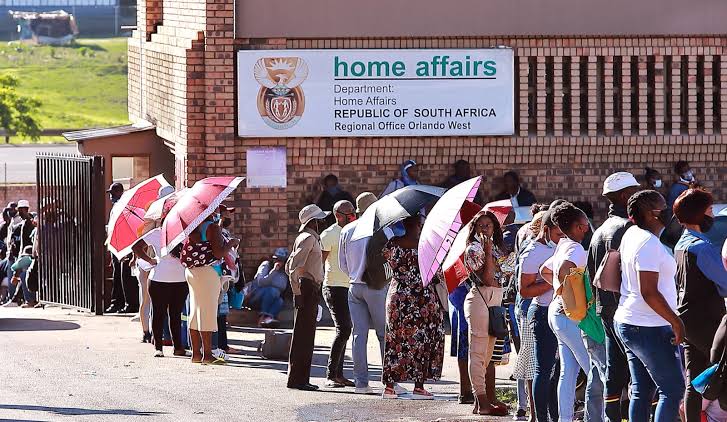
Department rejects claims that minister or political parties decided to suspend ‘good cause’ interviews
The Department of Home Affairs has moved to counter what it describes as a coordinated disinformation campaign surrounding a Constitutional Court ruling on the processing of asylum applications.
The department says false claims have been circulating about changes made to the asylum application process following a 7 July 2026 Constitutional Court judgment involving the Scalabrini Centre of Cape Town and the Minister of Home Affairs.
The controversy centres on the court’s decision concerning provisions of the Refugees Act that governed how asylum seekers could access the asylum system, including the requirement for certain applicants without the required documentation to undergo so-called “good cause” interviews.
The Constitutional Court found certain provisions of the Refugees Act unconstitutional and invalid. Among other things, the court found that the provisions created an additional bureaucratic process without sufficient standards to guide officials and could prevent asylum seekers from having their claims properly considered.
What happened after the court ruling?
When the judgment was handed down in July, Home Affairs said it respected the authority of the Constitutional Court and would study the judgment before determining the appropriate way forward.
The department subsequently issued an operational directive to give effect to the court’s binding ruling.
The directive means the department must process asylum applications in line with the Constitutional Court’s findings, including removing procedural barriers that the court declared unconstitutional. The government has described this as part of its constitutional obligation to implement the judgment.
However, the changes have triggered strong public and political debate over immigration and the asylum system.
Home Affairs says some of the claims circulating online have gone beyond criticism of the policy and have instead falsely suggested that the Minister of Home Affairs, the department or political parties themselves decided to suspend the “good cause” interviews.
The department has rejected this.
Home Affairs: ‘This is categorically false’
In a statement issued on Wednesday, the department said it had vigorously opposed the court case but was nevertheless required to comply with the Constitutional Court’s final judgment.
It said the operational directive was issued solely to give effect to the court ruling and was not a political decision taken by the minister or a political party.
“The Constitutional Court handed down a binding judgment, which the Department is constitutionally obliged to implement,” the department said.
Home Affairs also rejected claims that the judgment automatically gives asylum seekers South African citizenship or amounts to the blanket legalisation of foreign nationals.
The department stressed that these claims are false.
The ruling does not automatically grant asylum seekers citizenship or refugee status. Rather, it concerns the legal process through which asylum applications must be received and considered.
Matter to be referred to IEC
Home Affairs says it will refer the matter to the Independent Electoral Commission (IEC) for consideration under the newly published Code of Conduct on Countering Disinformation.
The department says the alleged campaign is particularly concerning because it believes some of the information being circulated could inflame tensions and contribute to violence.
It has therefore called on members of the public to verify information before sharing it, particularly information relating to immigration and asylum seekers.
Home Affairs said deliberate disinformation targeting officials and seeking to undermine constitutional institutions poses a threat to social stability.
The department also reaffirmed that it will continue implementing binding court judgments, regardless of whether it was successful in the litigation that led to those judgments.
The latest dispute comes as South Africa continues to debate immigration, undocumented migration and the capacity of the country’s asylum system — issues that have become increasingly contentious ahead of the 4 November 2026 local government elections.
ECNewsLive | Beyond the news